Why might one test be insufficient?
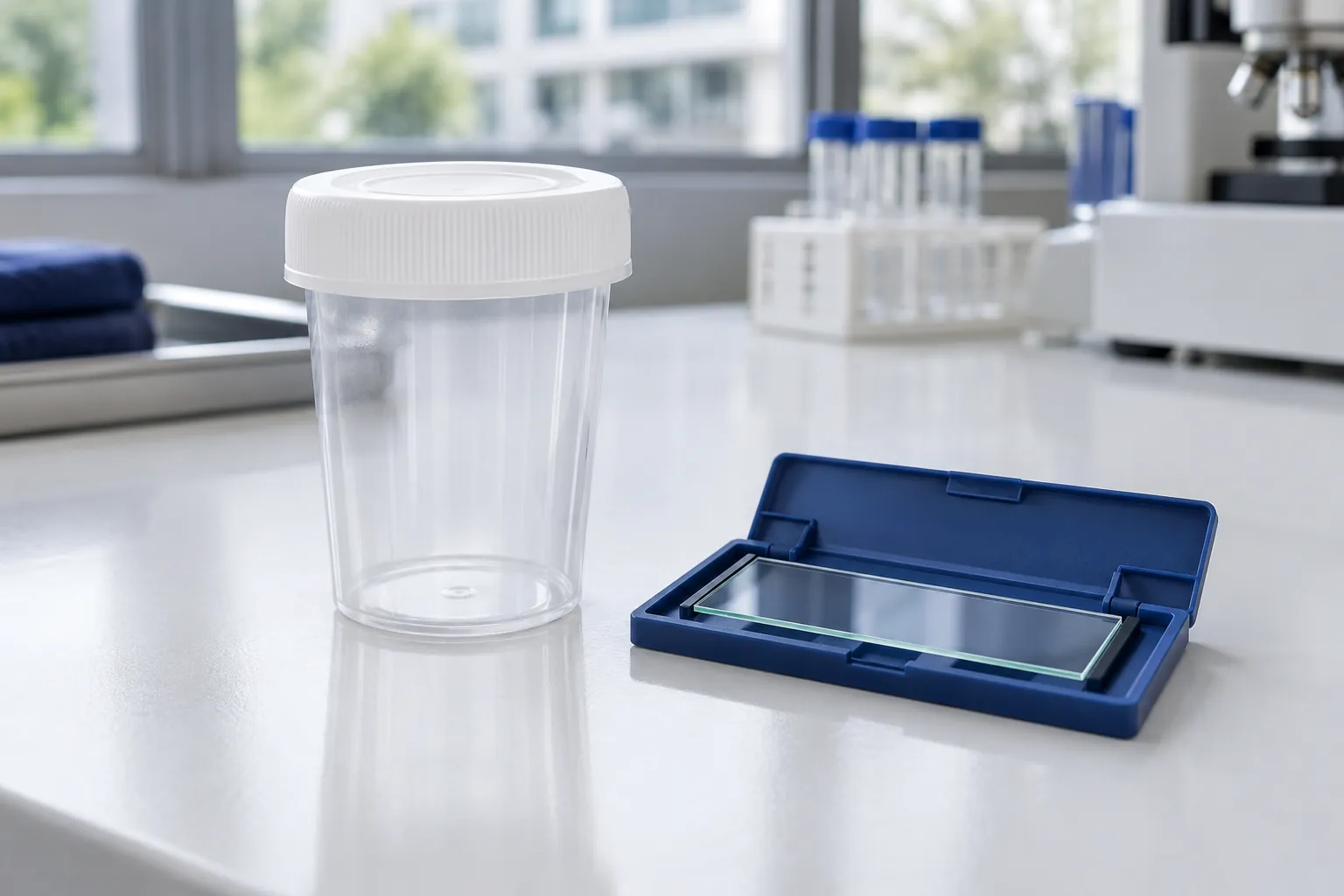
Azoospermia should be confirmed using at least two separate semen analyses. Biological variation and collection conditions can affect interpretation. Your clinician should choose the timing of another test in light of recent illness and earlier findings. A fixed waiting period found online is not an individual instruction for every situation.
What should you ask the laboratory?
Ask whether the report describes an initial microscopic examination only or also an examination of the centrifuged pellet. Very small numbers of sperm may be found only after a more detailed search. This can change the distinction between azoospermia and cryptozoospermia and influence planning. Method and reporting therefore matter alongside the numbers.
Describe collection conditions accurately
Follow the laboratory’s instructions on abstinence, the collection container, transport and delivery. Tell staff if some of the sample was lost or collection was incomplete. Mention recent fever, changes in medication and previous semen results. Looking at semen volume, colour or consistency at home cannot establish whether sperm are present.
Preparing for the next consultation
Keep both reports with their dates and collection details. Confirmed azoospermia calls for urology/andrology assessment to investigate its cause. Ask when the female partner should be assessed and which additional test would change the next decision. The goal is a comprehensible plan for the couple rather than simply attaching a label.
Bring the complete report, not only a cropped result on your phone. Include units, laboratory comments and sample volume. Ask about any collection instruction you do not understand. Rather than repeating tests at different laboratories solely to relieve anxiety, agree which repeat examination would provide useful, comparable information for the next decision.
Frequently Asked Questions
Can a home sperm test confirm azoospermia?
No. Home testing cannot replace a detailed laboratory examination and the necessary assessment of the pellet.
What if sperm appear in the repeat sample?
The laboratory and clinician should review the result; implications for storage or treatment depend on the number and quality of sperm available.