Start with the reason for azoospermia
In obstructive azoospermia, sperm may be produced but cannot reach the ejaculate. In non-obstructive azoospermia, production is impaired and may be limited to small areas. This distinction, previous procedures and genetic findings influence the discussion. An operation name alone does not explain whether it suits your situation.
Needle aspiration: PESA and TESA
PESA collects fluid through a needle from the epididymis, the structure beside the testicle. TESA samples the testicle using a needle. These methods may be considered in appropriate obstructive cases. Current EAU guidance does not recommend TESA for non-obstructive azoospermia. A less invasive procedure is not automatically the more suitable procedure.
Tissue extraction: TESE and Micro-TESE
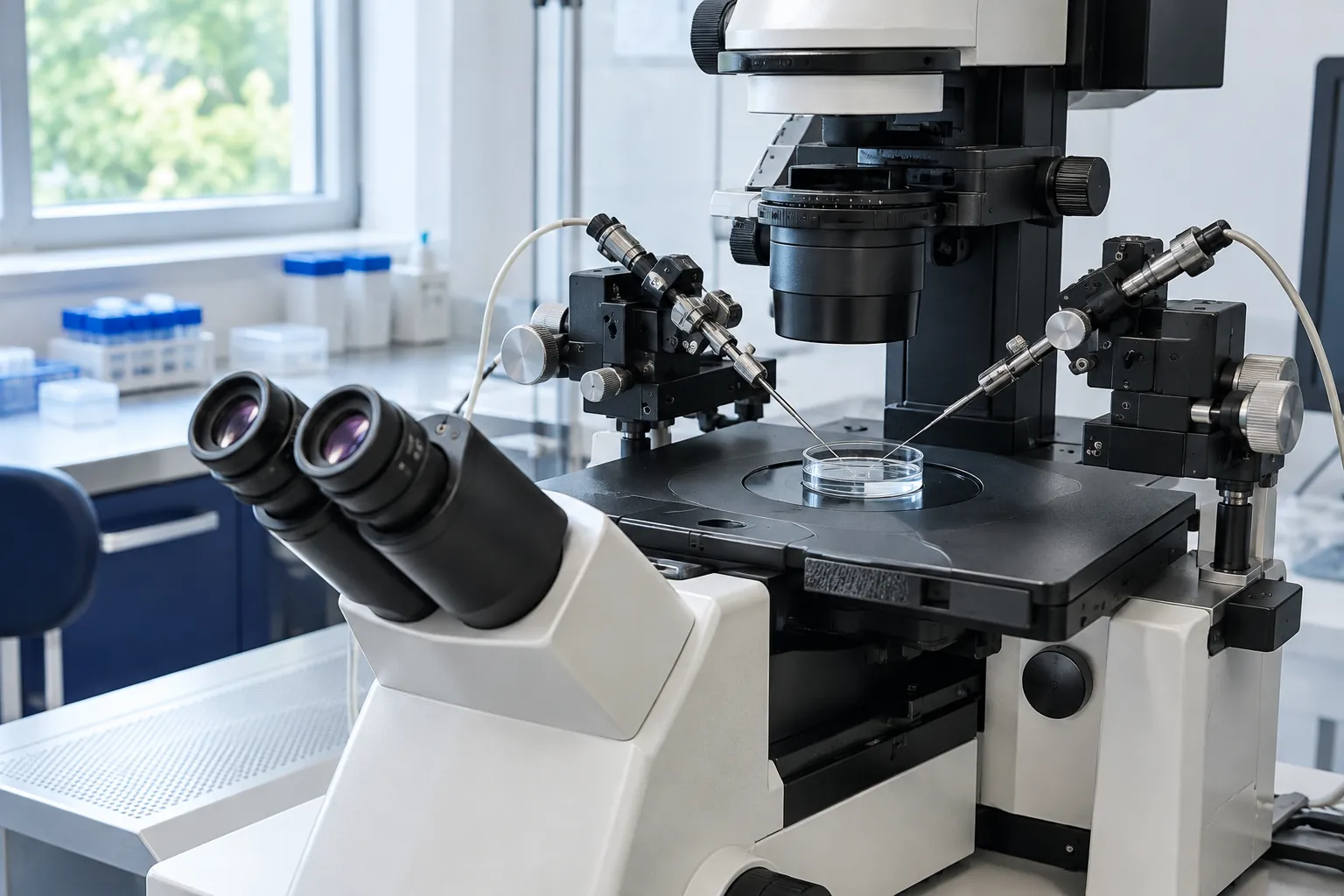
Conventional TESE removes small testicular tissue samples through an incision. Micro-TESE uses an operating microscope to guide the search for potentially productive tubules. It is generally considered for non-obstructive azoospermia. The surgeon obtains tissue and embryologists search the sample; neither microscopy nor surgery guarantees finding usable sperm.
Plan the next step before the procedure
Ask who will perform the operation, how samples will be examined, whether freezing is planned and how the result affects the partner’s IVF treatment. Discuss anaesthesia, bleeding, infection, discomfort and possible effects on testosterone. Bring previous operative, pathology, laboratory and genetic reports so that decisions are based on the complete history.
Ask why the proposed method fits your diagnosis rather than another retrieval technique. This makes the explanation specific to your findings.
Frequently Asked Questions
Does finding sperm guarantee pregnancy?
No. Retrieval, fertilisation, embryo development and pregnancy are separate stages. The couple’s circumstances and laboratory findings all matter.
Is Micro-TESE necessary for every patient?
No. The appropriate approach depends on the cause of azoospermia and specialist assessment, rather than choosing the most complex method.